• Skip to primary navigation
  • Skip to main content
  • Skip to primary sidebar
  • Skip to footer

Money Saving Duo

Discovering how to live a glorious life on less

  • Home
  • Freebies & Giveaways
  • Smart Spending
  • Budget Tips
  • Family on Mission
    • Travel & Staycations
  • Favorite Money Saving Tools
  • Partner Deals

Aaron Mora

Why We Chose Monarch Money When Our Favorite Money App Decided to Come to An End

December 17, 2023 by Aaron Mora

Change is the only constant in life, and financial management apps are no exception. Recently, we found ourselves in the midst of a significant change as Mint, our trusted companion in budgeting and financial planning for years, announced its shutdown. Faced with the need to find a suitable alternative, we carefully evaluated our options and ultimately decided to make the switch to Monarch Money. Curious why we made the switch? We’re going to delve into the reasons behind our choice, highlighting the pros and cons of Monarch Money as we bid farewell to Mint.
What We Love About Monarch Money

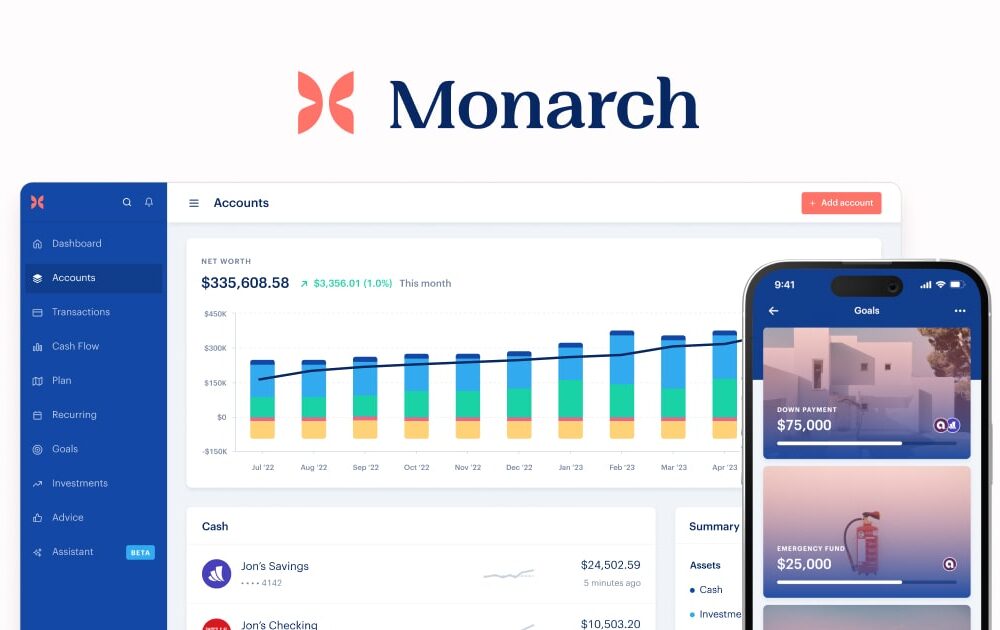
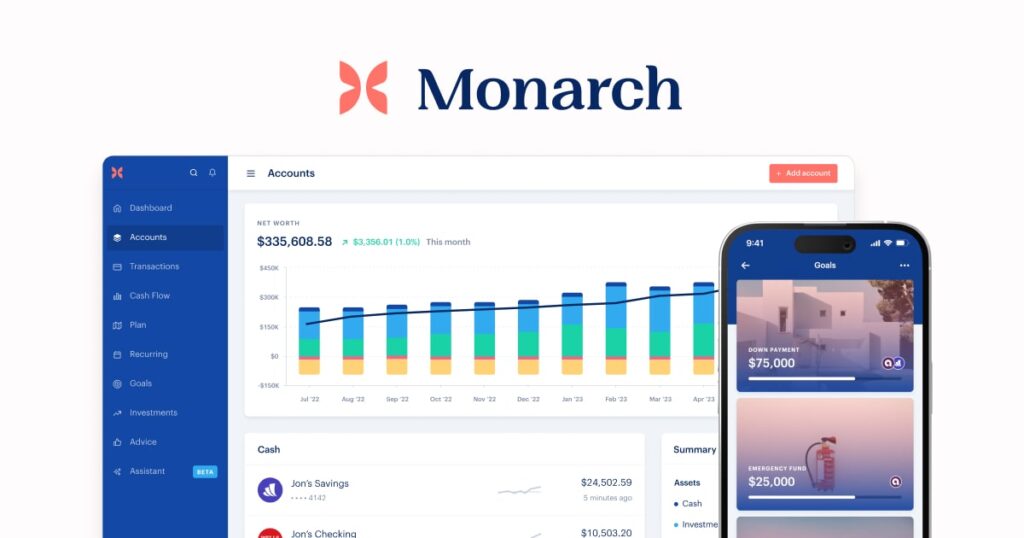
  1. User-Friendly Interface: Monarch Money boasts a clean and intuitive user interface that makes managing finances a breeze. The dashboard is well-organized, providing a comprehensive overview of your financial landscape without overwhelming you with unnecessary details.
  2. Trusted Leadership: Monarch Money was started by a former Mint Executive! We feel like it has the same heart and soul we loved about Mint.
  3. Advanced Security Measures: Security is a top priority when it comes to handling sensitive financial information. Monarch Money impressed us with its robust security features, including end-to-end encryption, two-factor authentication, and other advanced measures that ensure our data remains secure.
  4. Customizable Budgeting Tools: Monarch Money understands that everyone’s financial journey is unique. The app offers highly customizable budgeting tools, allowing users to tailor their budgets to their specific needs and financial goals. This level of flexibility was a significant factor in our decision-making process.
  5. Cryptocurrency Integration: As the financial landscape evolves, so do our needs. Monarch Money goes beyond traditional financial tracking by seamlessly integrating cryptocurrency accounts. This forward-thinking approach aligns with the growing interest in digital assets, providing a more holistic view of our financial portfolio.
  6. Automated Expense Tracking: Monarch Money’s automated expense tracking feature streamlines the process of categorizing and analyzing expenditures. This not only saves time but also enhances accuracy in budget tracking, a crucial aspect of effective financial management.

The Challenges With Monarch Money

  1. Learning Curve: While Monarch Money’s interface is user-friendly, some users might experience a slight learning curve during the transition. The navigation and features may take some time to get accustomed to, but we picked them up pretty quick moving from Mint.
  2. Limited Historical Data Import: One drawback we encountered during the switch was losing some of our history from Mint. However, there is an amazing import feature the moves your info directly from Mint. Great feature of Monarch!
  3. Subscription Cost: Monarch Money operates on a subscription-based model, and while the cost is reasonable for the features offered, it may be a potential deterrent for users who are accustomed to free financial management apps like Mint.

In the face of Mint’s imminent shutdown, the decision to transition to Monarch Money is one we feel good about! The pros, including a user-friendly interface, advanced security, customizable budgeting tools, cryptocurrency integration, and automated expense tracking, outweighed the cons in our assessment. While there may be a slight learning curve, the overall value and innovative features offered by Monarch Money aligned with our evolving financial needs.

As we embark on this new chapter with Monarch Money, we look forward to exploring its full potential and adapting to the changes in our financial management routine. Change may be inevitable, but with the right tools, it can also be an opportunity for growth and improvement.

Want to give Monarch Money a try? Get an extended 30-day free trial if you sign up with our referral link! We think you’ll like it for the same reasons we do!
Filed Under: Budget Tips, Duo Update, Uncategorized Tagged With: budgeting, budgeting apps, mint budgeting, monarch money

Exploring Alternatives to the Mint Budgeting App: Budgeting Apps to Continue Keeping Your Finances in Check

December 16, 2023 by Aaron Mora

In a surprising turn of events, the popular Intuit Mint budgeting app has announced its impending shutdown. For many users who have relied on Mint for years to manage their finances, this news may come as a shock. However, the world of personal finance management is vast, and there are several alternatives that offer similar features and functionalities.

Join us as we explore some noteworthy alternatives to Intuit Mint, discussing their pros and cons, to help you find the perfect fit for your financial needs.

YNAB (You Need A Budget):

  • Pros:
    • Zero-Based Budgeting: YNAB follows the zero-based budgeting philosophy, where every dollar has a specific job, leaving no room for financial ambiguity.
    • Real-time Sync: YNAB offers seamless real-time synchronization with your bank accounts, ensuring that your budget is always up to date.
    • Educational Resources: YNAB provides excellent educational resources to help users better understand and manage their finances.
  • Cons:
    • Subscription Fee: YNAB operates on a subscription-based model and some users may find the monthly or annual fee a drawback. The cost ranges between $8.99/mo if you opt for the annual fee or $14.99/mo if you go monthly.

Monarch Money

  • Pros:
    • Intuitive Design: Monarch Money boasts an intuitive and user-friendly design for a seamless budgeting experience.
    • Customizable Categories: Users can create and customize budget categories to align with their unique spending patterns.
    • Expense Tracking: Monarch Money provides robust expense tracking features to keep you informed about your spending habits.
    • Mint Leadership: If you loved Mint, Monarch was started by a former Mint leader.
  • Cons:
    • Newer Player: As a newer entrant, Monarch Money might not have the same extensive user base or history as some other options.
    • Subscription Fee. There is a monthly fee to use Monarch, although they offer a discount to those switching from Mint. And a free trial. Click here to try out Monarch for 1 month free!

PocketGuard:

  • Pros:
    • Automatic Categorization: PocketGuard automatically categorizes your transactions, making it easier to understand your spending habits.
    • In-App Bill Negotiation: This unique feature helps users find better deals on bills, potentially saving money on regular expenses.
    • Goal Tracking: PocketGuard allows you to set and track financial goals, motivating you to stay within budget.
  • Cons:
    • Limited Investment Tracking: Unlike Mint, PocketGuard has limited capabilities when it comes to tracking investments.

Empower (formally Personal Capital):

  • Pros:
    • Investment Tracking: Empower excels in investment tracking, providing a comprehensive overview of your investment portfolio.
    • Retirement Planner: The app includes a retirement planner tool that helps you visualize and plan for your financial future.
    • Net Worth Tracker: Empower offers a robust net worth tracking feature, giving you a holistic view of your financial health.
  • Cons:
    • Learning Curve: The array of features may result in a steeper learning curve for new users.

Goodbudget:

  • Pros:
    • Envelope System: Goodbudget employs the envelope system, allowing users to allocate funds to specific categories and spend accordingly.
    • Syncs Across Devices: The app syncs across multiple devices, ensuring that your budget is accessible wherever you go.
    • Debt Paydown Tools: Goodbudget provides tools to help users strategize and accelerate their debt paydown.
  • Cons:
    • Free Version Limitations: While Goodbudget offers a free version, it comes with limitations on the number of envelopes and accounts you can use.

EveryDollar

  • Pros:
    • Dave Ramsey’s Approach: EveryDollar follows Dave Ramsey’s zero-based budgeting approach, focusing on giving every dollar a specific job. The Money Saving Duo has seen huge results from those who follow Dave Ramsey.
    • User-Friendly Interface: EveryDollar features a user-friendly interface, making it easy for users to navigate and set up their budgets.
    • Financial Peace University Integration: Users familiar with Dave Ramsey’s Financial Peace University can seamlessly integrate its principles into their budgeting with EveryDollar.
  • Cons:
    • Manual Transaction Entry: EveryDollar may require users to manually input transactions, which can be time-consuming compared to apps with automatic synchronization.
    • Limited Free Version: The free version has some limitations, and the Plus version comes with a subscription fee.

As the Intuit Mint app sunsets, it’s essential to explore alternative budgeting solutions that align with your financial goals and preferences. Whether you prioritize real-time synchronization, investment tracking, or a specific budgeting philosophy, these alternatives offer a range of features to suit various needs. Take the time to evaluate your priorities and choose the budgeting app that will best support your journey toward financial well-being.

Filed Under: Budget Tips, Duo Update, Favorite Money Saving Tools, Save Money Tagged With: budgeting, budgeting apps, mint budgeting app

Our Movie Adventure to the Crystal, MI Box Office Theater

February 16, 2019 by Aaron Mora

Movie adventure with the boys

We love going to the movies, but by the time you buy tickets for the entire family, it can be a long term negotiation on what you can afford at the concession stand. As a result, we are always on the lookout for a great deal.

A friend tipped us off to the Crystal Box Office in Crystal, MI as a suggestion. An affordable, single screen theater in a small town we had never stopped in before. We checked the schedule and saw that they were playing Aquaman around New Years. The boys and I were ready for an adventure to someplace new, and we set off to check it out. 

I had no idea what to expect. Maybe a small screen and long lines. But we arrived to find a parking space right in front of the theater and no wait to purchase our tickets at the old style booth that opened to the outside sidewalk. The tickets were only $4 each!

Then we got inside and found a concession stand from a bygone era, filled with the fresh smells of popcorn and other treats. For $3 you could get a huge popcorn and fountain pop for a buck.

We had the theater almost to ourselves and got a perfect spot toward the middle. The sound was great and the screen large. While we were enjoying the film we didn’t even remember that we were at a smaller theater. 

The building is a bit dated and the facility shows a little wear and tear, but it also gives it an old school charm. I would recommend this stop to anyone in the Central Michigan area looking for a fun, new spot to catch a flick on a budget. Although, you’ll want to check ahead to see if they are playing the movie you want on their only screen. 

For the most up to date listings and more information, visit their facebook page at facebook.com/crystalboxoffice.

Filed Under: Duo Update, Family on Mission, Travel & Staycations Tagged With: crystal, crystal box office theater, family activities, family fun, movie theater, movie theatre, Pure Michigan

Not Sure How to Budget? Start With These Four Simple Steps

December 14, 2018 by Aaron Mora

How to Budget Basics

Understanding how to budget isn’t something we’re all necessarily familiar with. But with a few simple steps, you can get started and begin to change your financial future.

How to Budget Basics


A few years ago we were lost. We had just started a business and suddenly found our bank account hitting rock bottom more often than we’d like to admit. When we both had steady paychecks, we tried not to spend frivolously. But if there was money in the account we figured that was a green light to spend at the local department store. Then we had to learn to live on less. After receiving another Non-Sufficient Funds announcement we decided to stop and assess where we were and how much we had to live on.

Related: Meet the Duo

So we started to track what we were spending. And an amazing thing happened. We had more control over what we spent when we made a decision before the money came how we were going to spend it. We found out that we could live on way less than we had been living on before things were tight with our start up.

Since that time there have been periods where we’ve had plenty financially and periods when things have been tight again, but we’ve always had a plan and have been blessed to not have to deal with an empty bank account.

Saving money isn’t rocket science. If you spend less than you make, you’ll come out ahead. But it doesn’t feel easy, especially at first.

Here are a few tips on how to get started in this area.

Watch your money.

A great first step is getting to know where your money is going. If you aren’t already, track your expenses for a month and determine your spending habits. There may be some things that surprise you. Like maybe those small stops for coffee are adding up to a big total at the end of the month. You can use a spreadsheet or there are a variety of different programs that can help.

We use a free app we love called Mint (mint.com). You simply login to all your financial services and it will help you track your expenses and keep up with how you’re doing. It will also create charts and graphs to help you visualize.

Determine your expenses.

Go through your monthly expenses and figure out what your recurring expenses are. They probably include things like a mortgage payment or rent, phone bills, groceries, etc. Make a list and determine how much each one costs each month.

Now determine which are discretionary and which are mandatory.  Mandatory expenses are bills you know you have each month and don’t change. Like a rent payment or student loan. These are easier to plan for because they are always the same.

Discretionary expenses have a bit more flexibility in that they are not a set amount. Like groceries or gas. These are also the areas that you may be able to find savings if you change your habits. However, discretionary doesn’t mean they’re not important. You have to eat and have an ability to travel. But usually there’s flexibility in how you spend in each area.

Items that are discretionary and not required for you to live are things you should consider keeping, adjusting, or cutting from your budget.

When we got serious about our budget, we ended up cutting cable TV and just using streaming services like Netflix. The result was us saving over $100 per month and there were only a few shows we missed at first. But after a short while, we got over it and have never looked back.

Calculate your income.

Now go through all your sources of income. For some this is pretty simple, especially if you are only drawing income from a single job. For others, you may have money coming in from different sources at different times. Track it and make a conservative estimate of your monthly income for the purposes of your budget.

If you find there is not enough coming in to meet your expenses, you should evaluate if there are additional places you can make money.

Is there a side hustle you can work on the side to make a little extra to apply toward your expenses or a financial goal? If you feel stuck professionally, do you have a plan for the future to get more training or experience for a promotion or to take a step in a new direction.

Put it all together.

Once you have your budget, start tracking your spending. Make sure your budget is realistic so you can stay within the limits. When you’re first getting started you will likely need to tweak amounts in different areas. When you hit the amount you budgeted for any particular area, you can’t spend any more until next month.

Related: Five Ways to Stop Spending and Start Saving Money Today

The power of a budget is that you are making your money do what you planned for, not making you a subject to your every impulse and whim. But it loses it’s power if you don’t work to stay within the parameters you set.

We don’t get it perfect every month, but we get it right way more than we used to by accident. How have you done with budgeting in the past? Do you have a plan?

Filed Under: Budget Tips, Duo Update Tagged With: how to budget

Primary Sidebar

Recent Posts

  • PaidViewPoint Review: Is This Survey App Worth Your Time?
  • Budget-Friendly Ideas for Stocking Stuffers Everyone Will Love
  • Weekend Deal Round-Up: Grab These Before They’re Gone!
  • 5 Sneaky Ways to Save on Halloween Decor (Even Last Minute)
  • How to Maximize Savings During Amazon Prime Big Deal Days (Oct 7-8, 2025)

Advertisment

Daily Boutique Deals

Advertisement

Disclaimer: We are not financial or investment advisors – just regular everyday people sharing tips we’ve learned through our own lived experiences. This information is provided for general educational and entertainment purposes and may not apply to your specific circumstances.

Archives

  • November 2025
  • October 2025
  • September 2025
  • May 2025
  • January 2025
  • November 2024
  • September 2024
  • February 2024
  • January 2024
  • December 2023
  • October 2023
  • May 2023
  • April 2023
  • March 2023
  • February 2023
  • January 2023
  • October 2022
  • August 2022
  • March 2022
  • January 2022
  • September 2021
  • August 2021
  • April 2021
  • March 2021
  • July 2020
  • September 2019
  • August 2019
  • July 2019
  • May 2019
  • March 2019
  • February 2019
  • January 2019
  • December 2018

Footer

Follow our blog with Bloglovin
  • Meet the Fam
  • Join Us on Facebook
  • Submit a Local Deal

Copyright © 2025 · Wellness Pro on Genesis Framework · WordPress · Log in