• Skip to primary navigation
  • Skip to main content
  • Skip to primary sidebar
  • Skip to footer

Money Saving Duo

Discovering how to live a glorious life on less

  • Home
  • Freebies & Giveaways
  • Smart Spending
  • Budget Tips
  • Family on Mission
    • Travel & Staycations
  • Favorite Money Saving Tools
  • Partner Deals

Budget Tips

Exploring Alternatives to the Mint Budgeting App: Budgeting Apps to Continue Keeping Your Finances in Check

December 16, 2023 by Aaron Mora

In a surprising turn of events, the popular Intuit Mint budgeting app has announced its impending shutdown. For many users who have relied on Mint for years to manage their finances, this news may come as a shock. However, the world of personal finance management is vast, and there are several alternatives that offer similar features and functionalities.
Join us as we explore some noteworthy alternatives to Intuit Mint, discussing their pros and cons, to help you find the perfect fit for your financial needs.

YNAB (You Need A Budget):

  • Pros:
    • Zero-Based Budgeting: YNAB follows the zero-based budgeting philosophy, where every dollar has a specific job, leaving no room for financial ambiguity.
    • Real-time Sync: YNAB offers seamless real-time synchronization with your bank accounts, ensuring that your budget is always up to date.
    • Educational Resources: YNAB provides excellent educational resources to help users better understand and manage their finances.
  • Cons:
    • Subscription Fee: YNAB operates on a subscription-based model and some users may find the monthly or annual fee a drawback. The cost ranges between $8.99/mo if you opt for the annual fee or $14.99/mo if you go monthly.

Monarch Money

  • Pros:
    • Intuitive Design: Monarch Money boasts an intuitive and user-friendly design for a seamless budgeting experience.
    • Customizable Categories: Users can create and customize budget categories to align with their unique spending patterns.
    • Expense Tracking: Monarch Money provides robust expense tracking features to keep you informed about your spending habits.
    • Mint Leadership: If you loved Mint, Monarch was started by a former Mint leader.
  • Cons:
    • Newer Player: As a newer entrant, Monarch Money might not have the same extensive user base or history as some other options.
    • Subscription Fee. There is a monthly fee to use Monarch, although they offer a discount to those switching from Mint. And a free trial. Click here to try out Monarch for 1 month free!

PocketGuard:

  • Pros:
    • Automatic Categorization: PocketGuard automatically categorizes your transactions, making it easier to understand your spending habits.
    • In-App Bill Negotiation: This unique feature helps users find better deals on bills, potentially saving money on regular expenses.
    • Goal Tracking: PocketGuard allows you to set and track financial goals, motivating you to stay within budget.
  • Cons:
    • Limited Investment Tracking: Unlike Mint, PocketGuard has limited capabilities when it comes to tracking investments.

Empower (formally Personal Capital):

  • Pros:
    • Investment Tracking: Empower excels in investment tracking, providing a comprehensive overview of your investment portfolio.
    • Retirement Planner: The app includes a retirement planner tool that helps you visualize and plan for your financial future.
    • Net Worth Tracker: Empower offers a robust net worth tracking feature, giving you a holistic view of your financial health.
  • Cons:
    • Learning Curve: The array of features may result in a steeper learning curve for new users.

Goodbudget:

  • Pros:
    • Envelope System: Goodbudget employs the envelope system, allowing users to allocate funds to specific categories and spend accordingly.
    • Syncs Across Devices: The app syncs across multiple devices, ensuring that your budget is accessible wherever you go.
    • Debt Paydown Tools: Goodbudget provides tools to help users strategize and accelerate their debt paydown.
  • Cons:
    • Free Version Limitations: While Goodbudget offers a free version, it comes with limitations on the number of envelopes and accounts you can use.

EveryDollar

  • Pros:
    • Dave Ramsey’s Approach: EveryDollar follows Dave Ramsey’s zero-based budgeting approach, focusing on giving every dollar a specific job. The Money Saving Duo has seen huge results from those who follow Dave Ramsey.
    • User-Friendly Interface: EveryDollar features a user-friendly interface, making it easy for users to navigate and set up their budgets.
    • Financial Peace University Integration: Users familiar with Dave Ramsey’s Financial Peace University can seamlessly integrate its principles into their budgeting with EveryDollar.
  • Cons:
    • Manual Transaction Entry: EveryDollar may require users to manually input transactions, which can be time-consuming compared to apps with automatic synchronization.
    • Limited Free Version: The free version has some limitations, and the Plus version comes with a subscription fee.

As the Intuit Mint app sunsets, it’s essential to explore alternative budgeting solutions that align with your financial goals and preferences. Whether you prioritize real-time synchronization, investment tracking, or a specific budgeting philosophy, these alternatives offer a range of features to suit various needs. Take the time to evaluate your priorities and choose the budgeting app that will best support your journey toward financial well-being.


Filed Under: Budget Tips, Duo Update, Favorite Money Saving Tools, Save Money Tagged With: budgeting, budgeting apps, mint budgeting app

Want to Save Money Fast and Jumpstart Your Emergency Fund? Here’s How to Save $1,000 in 30 Days

May 31, 2023 by Kati Mora

How to Save $1,000 in 30 Days image

Are you trying to save money fast? Saving a $1,000 for your emergency fund is a good goal to shoot for. Whether you are able to make big changes or small, here are some of our top tips to help you spend less and save $1,000 in 30 days:

An image with text that says "How to Save $1,000 in 30 Days" over a hand dropping coins into a jar

Start by looking at your budget

Before you can reach any of your money goals, its important to make sure you look at your budget. Don’t have a budget? Then your goal is to set one. Budgets may seem scary if you aren’t use to having one, but they are a really great tool to help you maximize how you use your money.

Not Sure How to Budget? Start With These Four Simple Steps

Once you have your budget set up, look at where you might be able to cut back spending. Are there any unnecessary expenses that are either eating away at your savings or preventing you from putting money into savings? If so, determine how much you are willing to cut back on those expenses and total those up. Put that amount towards your $1,000 goal.

Once you have cut back on those unnecessary expenses, look for other categories you may be able to spend less in by making some simple changes in your daily routine. You may be surprised at how many of these small changes add up.

For example: If you spend any money on food that you don’t make at home, this could be an area where you could save quite a bit if you are willing to give it a try. Instead of dining in at restaurants or ordering takeout, consider making meals at home and packing leftovers when you can. You don’t have to be the world’s greatest chef to make this work for you – stick with simple recipes and add the money you save to your emergency fund. And who knows, you may find that that this is a habit that sticks.

Cancel the memberships you never use and rethink the ones you do

Every few months, our family takes a look at what memberships we have – especially our streaming memberships – and cut whichever ones we aren’t using as much as we used to. If you are looking to save $1,000 in 30 days, this might be something worth doing if you haven’t considered doing so or haven’t done in awhile. Other examples of memberships to reevaluate include:

  • Gym memberships. If you have a gym membership and haven’t gone in awhile, cancel it.
  • Magazine subscriptions. Cancel magazine subscriptions and other publications that aren’t essential to your life.
  • If you haven’t cut cable yet, now might be a great time to do that. Switch over to streaming and you’ll save whether you choose a free streaming platform or one with a monthly subscription. Just remember, to keep it in budget.
  • Subscription boxes. Whether you cancel or delay your subscription box, this could be another way to save money if you are currently receiving these on a regular basis.
  • Cell phones and Internet. Do you really need the plan you have or can you shop around for a better price? This may be a way to save a little extra money each month.
  • Insurance policies. When is the last time you shopped around for insurance? Sometimes when you shop around, you can find better prices without sacrificing on coverage. If its been awhile since you’ve done this, this might be a great time to start asking around.

Don’t buy more groceries than you need; eat out less and have meals you can make quickly and cheaply at home.

It’s easy to get carried away when you’re shopping for groceries. You may find yourself picking up extra items, thinking you’ll use them later in the week or month. But if you don’t actually use those items, they’ll just go bad and end up costing money!

It’s better to plan your meals ahead of time and only buy what you need for those meals–no more, no less. If there are certain ingredients that would be useful in other recipes but aren’t needed right now (such as garlic or spices), add those things onto a separate list so that you remember to buy them later on down the road when needed again by another meal you are planning to make.

Be smart about shopping for groceries and essentials like toilet paper, paper towels and detergent.

If you’re like most people, your grocery bills can add up quickly. The good news is there are plenty of ways to save money on groceries:

  • Make a list and stick to it. This is an incredibly helpful way to stay in budget when shopping for grocery and household essentials.
  • Use cash back apps on your phone. We have a whole list of apps that we use to save money when grocery shopping. Many of them allow us to cash out through our PayPal account while others let us cash out for gift cards we can use for later purchases. Either way, this can be a helpful way to put more money aside for your emergency fund.

Consider what assets you can let go of

Saving is great, but sometimes its still not enough to kick start your emergency fund – especially if you don’t have much wiggle room in your budget to begin with. If this is you, it may be time to consider letting go of some of your personal belongings that you are comfortable parting with. Can you sell them on Facebook marketplace or host a garage sale? Selling items that are still in relatively good condition can be a great way to jumpstart your emergency fund.

Start a side hustle or consider whether its time to ask for a raise

Another way to bring more money into your account on a regular basis is to either start a side hustle or consider whether its time to ask for a raise. Both options can potentially bring in more money on a regular basis to your account and you can set this aside towards your emergency fund. Side hustles are great if you just need a short term infusion of cash – like if you’re trying to quickly put aside an extra $1,000 in 30 days. Asking for a raise may result in more money coming in on a more consistent basis and if you haven’t asked for one in awhile, maybe now is the time.

You can save money fast by making small changes

You can save money fast by making small changes to your spending habits. For example, canceling the membership you never use or adding cash back apps on your phone are easy ways to make more room in your budget for funds you can put towards your emergency fund. Don’t have a lot of margin to begin with? Consider selling some of your personal items you are comfortable letting go of or starting a side hustle that works with your schedule. Any of these steps can help you work towards putting money aside for something unexpected.

Conclusion

You don’t have to be an expert to save money fast. Identify ways you can reduce what you spend and reallocate that money to your emergency fund. If that’s not enough to reach $1,000 in 30 days, you may need to look at ways to bring more money in. This could include picking up a side hustle or selling some of your personal items you are ready to say goodbye to. Either way, these steps can help you reach your goal of saving $1,000 in 30 days, and have a better idea of how much money comes in and goes out each month–which means you can start saving even more!

Filed Under: Budget Tips, Duo Update, Save Money Tagged With: money saving tips, save $1000 in 30 days

Make a Plan to Save on Groceries with this Grocery Budget Calculator

February 19, 2023 by moneysavingduo

If you are looking to save money on groceries, this grocery budget calculator might be a good place to start.

Looking for other ways to save money? Be sure to check out our top money saving apps to use at the grocery store and Iowa State University’s Extension and Outreach website for more great tips and strategies.

Filed Under: Budget Tips, Duo Update, Favorite Money Saving Tools

Our Top Ten Money Saving Tips As A Family of Six

March 13, 2021 by Kati Mora

Money Saving Duo Family of Six

Please note: This post contains affiliate links which means that when you click on them, we may be financially compensated for referring you there. We just thought you should know.

Here’s some exciting news… our family became an ‘official’ family of six in 2020!

The Money Saving Duo Family of 6

And as I am sure you can imagine, with a family of six, certain expenses go up. But of course, as you know, Aaron and I are always looking for ways to spend less, and we’ve discovered a few new tips and tricks to keep things affordable.

Whether you have a family of six or a party of one, these tips should help you keep more money in your pocket without making you feel like you’re giving up on all the fun.

  1. Use reward credit cards whenever possible. We know Dave Ramsey would disagree, but if you are living by your budget and making financially responsible decisions, reward credit cards can be a great way to score free hotel rooms and free air travel for dollars you would have to spend anyway. We have used an IHG rewards credit card and have a Southwest and Hilton Hotels card that we are currently using to stock up on free rooms and travel. Just make sure you pay off the full balance each month so you don’t get charged interest.

Sign up for your own Southwest Rapid Rewards Card using our affiliate link and you’ll earn 40,000 points when you spend your first $1000 on purchases in your first three months.

  1. Eat meals at home. Eating at a restaurant is CRAZY expensive with a family of six – especially when two of those people are pre-teen boys. Our family loves to go out to eat and order in, so this is one area we can sometimes go over on in terms of budget. But we prioritize eating at home and aim to eat at restaurants just once per week. To keep costs down even further we always keep an eye out for coupons to our favorite restaurants and save our receipts. If you scan them with the CoinOut app, you’ll get a few cents back after every meal. Fetch Rewards has also started giving you points for scanned restaurant receipts which you can turn around and use to redeem gift cards.
  2. Skip the theater and host your own movie night at home (or find a less expensive theater). Even before COVID-19, our family preferred hosting our own movie nights at home. We pop popcorn, watch a movie on Disney+ or occasionally rent one. Going to the movies had gotten REALLY expensive – especially as a family of six! But when theater’s do eventually reopen, we’ve found that smaller theaters often charge a fraction of the price to attend a show. For example, the Crystal Theater in Crystal, MI is one we’ve discovered to be much more affordable and has a pretty current line up for us to enjoy when we do want that movie-going experience.
  3. Use money saving apps. I (Kati) currently have 13 money saving apps on my phone. These range from cash back apps I use while grocery shopping to games that pay me for playing with gift cards. It may sound like a lot, but they are so easy to use – often just scanning my receipts when I get home from the store. Last year, I cashed out over $500 in cash and gift cards.
  4. Shop for birthdays and holidays throughout the year. In 2019 we stumbled on an amazing clearance sale in early January and were able to stock up on ~50% of our gifts for the year. I’m not going to lie though, this takes a bit of planning and thinking ahead. But if you can keep an eye out for a good deal and keep in mind who you need to shop for, this can be a great way to stay within your gift budget AND give some pretty great gifts for birthdays, Christmas and other celebrations too.
  5. Consider getting a membership to your local museums and zoos. This is one of my favorite travel hacks – most museums and zoos offer reciprocal memberships to other zoos and museums, which means you can go to a lot of them across the country for free or at a reduced rate. We were planning a spring break trip to Gatlinburg before COVID-19 hit and planned to visit the zoo in Knoxville. With our membership here at our local zoo, we would have gotten 50% off our general admission. Way more affordable than many of the excursions around.
  6. Visit the library to take advantage of FREE books, activities and more. The library is one of my favorite places because its such a great resource for every single person in a community. In fact, I (Kati) am honored to serve on the board of our local library system, the Chippewa River District Library. If you haven’t been to your local library in awhile, you might be surprised to find that they don’t just offer books for you to borrow, but STEM kits and other educational resources too – including digital ones you might be able to take advantage of even if your library is closed right now. When at the library, be sure to check out their calendar of events – there are always a lot of fun free ways to spend time together at the library.
  7. Keep an eye out for FREE family friendly activities in your local community or offered online. Follow local community pages on Facebook or keep up with our posts for events and activities that are easy on the wallet. This is a great way to not waste the weekend and have fun with others whether in person or remotely.
  8. Shop for gently used kids clothes at resale shops or consider setting up a clothing swap event with a local moms group. Kids grow through clothes SO fast and it makes little sense to spend a lot of money on something they will wear for such a short period of time. We’ve had great success finding clothes for our kids at resale shops. You may also save money by connecting with a local moms group and setting up a clothing swap event either in person or virtually. Everyone brings their gently used clothes that their kids have grown out of and swaps them for clothes their kids need now.
  9. Ditch the paper towel. If your kids are like ours, they spill things… a lot. One way to save a little extra cash? Ditch the paper towels for regular towels. Reuse them for all the spills and save a little money in the process.

We’re still figuring out how to make the most of our budget now that our family has grown. What are your favorite family-friendly money saving tips?

Filed Under: Budget Tips, Duo Update, Save Money Tagged With: family, money saving tips, saving money tips

Mid Michigan College to Host Free Financial Workshops this Fall

September 15, 2019 by Kati Mora

Piggy Bank

Looking to get ahead financially? Take advantage of three free classes being offered this fall by Mid Michigan College!

Putting Pennies into a Piggy Bank

Having a game plan for our finances has been a total game changer. Aaron and I were never frivolous with our money, but we started our married lives with a whole lot of student loan debt and then continued to acquire debt long after school was over because it felt like it was a way to meet our needs.

Eventually, we found ourselves in a pretty tight financial spot and realized we needed to rethink our financial game plan and now, finally, we’re in a position where we’re not worrying every day about whether or not we’ll be able to make ends meet.

When it comes to a financial game plan, knowledge is power. That’s why we love sharing educational opportunities designed to help people develop a better game plan for their finances.

This fall, Mid Michigan College is offering three different financial workshops that may appeal to you and your needs. Each class if offered free-of-charge and might provide you with the inspiration you need to make choices that will positively impact your future.

The classes include:

The Entrepreneurship Equation where you’ll learn how to put banking, retirement and insurance tools to work and build and protect your business.

Foundations of Investing where you’ll learn the ropes of investing! From developing a strategy to choosing quality investments, and from building a diverse portfolio to investing for the long term, you’ll leave knowing how to focus on what you can control.

Making Your Money Last where you’ll learn what to consider when developing a withdrawal strategy and discover ways to plan for expected and unexpected expenses with insurance.

Interested in attending one or all of these classes? Get more information and register online today. Classes are scheduled for September 18th, October 16th and November 20th.

Filed Under: Budget Tips, Duo Update Tagged With: educational resources, financial planning, free resources, mid michigan college

Free Download: Make a Budget Worksheet

August 14, 2019 by moneysavingduo

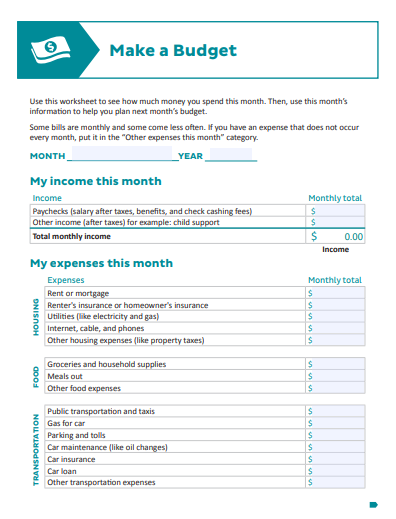
Make a Budget Worksheet

Just starting out on your money saving journey? This free Make a Budget resource from the Federal Trade Commission might be a valuable resource to help you get your money on track.

Make a Budget Worksheet

This one-page budget worksheet will help you plan and track your spending – giving each dollar you have a purpose. You can download it for free and fill it out on your computer or order a tear-off pad at no cost to you.

This resource is made available through the Federal Trade Commission.

Filed Under: Budget Tips, Duo Update, Favorite Money Saving Tools, Freebies & Giveaways

« Previous Page
Next Page »

Primary Sidebar

Recent Posts

  • PaidViewPoint Review: Is This Survey App Worth Your Time?
  • Budget-Friendly Ideas for Stocking Stuffers Everyone Will Love
  • Weekend Deal Round-Up: Grab These Before They’re Gone!
  • 5 Sneaky Ways to Save on Halloween Decor (Even Last Minute)
  • How to Maximize Savings During Amazon Prime Big Deal Days (Oct 7-8, 2025)

Advertisment

Daily Boutique Deals

Advertisement

Disclaimer: We are not financial or investment advisors – just regular everyday people sharing tips we’ve learned through our own lived experiences. This information is provided for general educational and entertainment purposes and may not apply to your specific circumstances.

Archives

  • November 2025
  • October 2025
  • September 2025
  • May 2025
  • January 2025
  • November 2024
  • September 2024
  • February 2024
  • January 2024
  • December 2023
  • October 2023
  • May 2023
  • April 2023
  • March 2023
  • February 2023
  • January 2023
  • October 2022
  • August 2022
  • March 2022
  • January 2022
  • September 2021
  • August 2021
  • April 2021
  • March 2021
  • July 2020
  • September 2019
  • August 2019
  • July 2019
  • May 2019
  • March 2019
  • February 2019
  • January 2019
  • December 2018

Footer

Follow our blog with Bloglovin
  • Meet the Fam
  • Join Us on Facebook
  • Submit a Local Deal

Copyright © 2025 · Wellness Pro on Genesis Framework · WordPress · Log in